

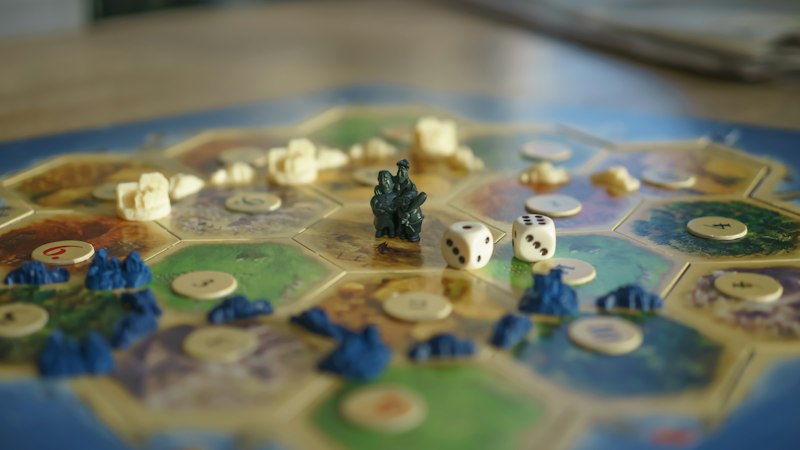
Our board game closet used to be a monument to good intentions and buyer's remorse — games we'd played twice and never touched again, purchased because a birthday party or a rainy weekend convinced us we needed something new. A neighbor mentioned offhand that her family had the exact same closet situation, and somewhere in that conversation the idea of a neighborhood swap night was born, almost as a joke. Two years later, it's a monthly fixture that's genuinely changed how our family thinks about buying games at all.
How We Actually Started It
The first version was simple to the point of being almost embarrassingly low-effort: five families, one Saturday evening a month, everyone brings two or three games from their own closet that they're tired of, and a folding table in someone's garage becomes the swap table. No formal rules at first, just "bring something, take something." It worked well enough on instinct that we never bothered adding much more structure to it.
What made it stick wasn't the games themselves, honestly — it was that it gave every family in the group a reliable, free, and genuinely fun activity on a predictable schedule, which took real pressure off inventing something to do every single weekend.
The Actual Swap Mechanics That Work
We eventually landed on a loose points system after a few awkward moments of two families both wanting the same game. Each game gets an informal value based on rough condition and how in-demand it is — a complete, well-loved family game is worth more swap credit than a beat-up one missing a few pieces. Nobody's tracking this with real precision; it's more of a shared sense of fairness than an actual currency. If a swap doesn't feel even, families just talk it out, which has never once turned into an actual conflict in two years of doing this.
Games that don't get swapped in a given month stay in a rotating "library" pile at whoever's hosting that month, available to borrow between swap nights the same way you'd borrow a book, which effectively expanded everyone's game closet without anyone buying a single new box.
What This Actually Replaced in Our Budget
Before the swap nights started, our family was buying somewhere in the range of six to eight new games a year, mostly on impulse — a game that looked fun at the store, a recommendation from another parent, a birthday gift for ourselves after a long week. Since the swap started, we've bought maybe one or two new games a year, specifically because we tried something at swap night, loved it enough to want our own permanent copy, and decided it was worth owning outright rather than waiting for it to cycle back around.
That's a real, meaningful reduction in spending on something that was previously a pretty steady drain, and it happened without anyone in the group feeling deprived — if anything, our actual game variety went up, since five families' worth of different tastes in games is a much bigger pool than any single household would buy on its own.
The Social Side Turned Out to Matter More Than the Games
What I didn't anticipate when this started as a practical decluttering solution was how much the recurring social gathering itself became the real value. Kids across five families who might not have naturally crossed paths now have a standing monthly hangout. Parents get a low-key evening of adult conversation while kids entertain each other with a new game nobody's played before. It's become the kind of thing everyone quietly plans their month around, in a way that a solo trip to buy a new game never could.
Handling Wear and Missing Pieces Honestly
We adopted an honesty-first approach early — if a game is missing a piece or two, the family swapping it says so upfront, and it goes into the pile marked as such rather than being a surprise for whoever picks it up. Most families don't mind a missing piece or two for a game they're trying out for free, and being upfront about it has kept trust high across the group, which matters more for a system like this than any formal rule would.
Starting Your Own Version
If you're interested in trying this, the barrier to entry is genuinely low. You don't need a big group — even three or four families is enough to make a meaningful dent in each household's game rotation. Pick a recurring date that's easy to remember, keep the swap rules loose rather than overly formal, and be upfront about condition. The real value isn't a perfectly optimized trading system. It's turning a closet full of underused games into a shared, rotating resource that costs nothing and gives everyone something to look forward to.
What Our Closet Looks Like Now
We still have a board game closet, but it doesn't feel like a monument to wasted money the way it used to. Games rotate in and out through swap nights, we own fewer titles outright but have access to far more variety, and the money that used to go toward impulse game purchases has quietly redirected itself elsewhere in the budget, without anyone in the family feeling like they gave something up to get there.
We've since had a couple of other neighbors ask to join once they heard about it, and expanding slowly rather than all at once has kept the group manageable and the trust high. If you're thinking about starting something similar, my honest advice is to start with the families you already know well and let it grow from there organically, rather than trying to recruit a large group right out of the gate.