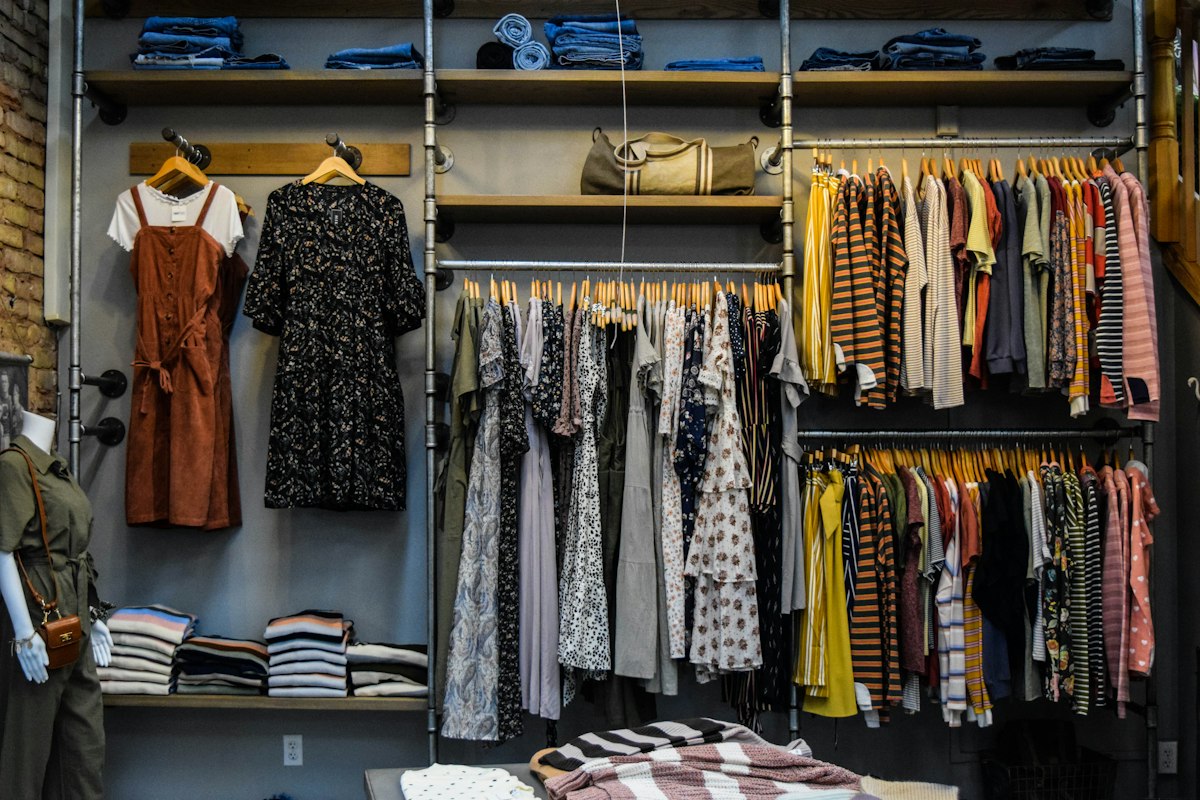



It started as a joke. My husband said, only half kidding, that our hall closet had become a museum of good intentions — the bread maker we used twice, a box of cables for devices we no longer owned, three tote bags of clothes I kept meaning to "do something with." I told him I'd sell every single item in that closet before the end of the month. I did not expect it to take over my thinking the way it did.
The Inventory Was the First Gut Punch
Before I could sell anything, I had to actually pull everything out and look at it. That part alone took an entire Sunday. I laid it all across the living room floor: a stand mixer attachment I never used, a pile of paperback books, two pairs of hiking boots that never got broken in, a stroller we kept "just in case," a guitar I bought during a brief phase, and clothes — so many clothes, most with tags still attached.
The number that stopped me was the estimate of what all of it originally cost. Rough math, receipts and memory combined, put it somewhere north of $2,200. Sitting in a closet. Depreciating in silence for years while I told myself it was all still "worth something."
Pricing Things Honestly Is Harder Than It Sounds
My first instinct was to price everything at what felt fair to me — which really meant what would make me feel okay about the original purchase. The guitar I paid $340 for, I wanted to list at $250. It sat for two weeks with no interest. When I finally looked at what similar guitars in similar condition were actually selling for nearby, the honest number was closer to $120. I dropped the price, and it sold within four days.
That pattern repeated with almost everything. The gap between what I paid and what the market would bear was consistently larger than my ego wanted to admit. Decluttering for cash forces a specific kind of honesty: not what something meant to you, not what you spent, but what a stranger would actually hand over money for today. It's a small, repeated lesson in the difference between price and value, and it stings a little every single time.
The Emotional Weight Was Uneven
Some items sold and I felt nothing. The cables, the bread maker, a stack of DVDs — gone, no attachment, good riddance. Other items surprised me with how hard they were to let go of, and it usually wasn't about the item itself. The stroller was tied to a specific stretch of early parenting I wasn't ready to admit was over. Selling it felt like closing a door I hadn't realized was still cracked open.
I want to be careful not to overstate this into something precious — it's a stroller, not a shrine. But I noticed that the items I dragged my feet on listing were never the most valuable ones. They were the ones with a story attached, and that story had nothing to do with what the item was actually worth on a resale app. Recognizing that distinction, in real time, changed how I think about buying things now. I ask myself whether I'm purchasing an object or purchasing a memory I could get some other, cheaper way.
The Actual Numbers
By the end of the month, I had sold twenty-three individual items across two resale apps and one local buy-sell group. Total proceeds came to $890. Not the $2,200 the original receipts implied, and that gap is the whole point. Depreciation is real, it's fast, and it doesn't ask your permission. A stroller loses most of its value the day you stop needing it, regardless of how gently it was used.
Shipping costs and app fees ate into the total more than I expected — somewhere around $60 across everything, mostly on bulkier items that needed boxes and higher postage. I started factoring that into my listing prices after the first few sales, padding a small buffer so a $30 item didn't quietly become a $22 item after fees.
What Changed After the Closet Was Empty
The cash itself went straight into topping off a slightly underfunded emergency savings account, which felt satisfying in a boring, responsible way. But the bigger shift was behavioral, not financial. I started asking, before any non-essential purchase, whether this was something I'd actually want to own in two years, or whether it was a version of the guitar — bought in a mood, destined for a closet.
I also stopped assuming clutter was harmless just because it wasn't costing me anything month to month. It was costing me something. Money that could have been earning interest instead sat as dead weight behind a closet door, and it took physically clearing that space to understand how much unclaimed value had been quietly accumulating there.
The Advice I'd Actually Give
Don't start with the item you're most attached to. Start with the easy, emotionally neutral stuff first — cables, kitchen gadgets, books. Selling a few things builds momentum and gets you comfortable with the pricing-reality-check part before you tackle anything that has a story attached.
Price at market rate, not purchase-price nostalgia. Check what similar used items are actually selling for before you list, and expect to adjust downward at least once.
Set a real deadline. "Someday" is how things end up in a closet for years in the first place. A hard end-of-month date is what actually got me to follow through instead of half-heartedly listing three things and giving up.
And give yourself permission to feel a little strange about some of it. Selling things you once loved isn't a failure of sentiment — it's just an honest reckoning with what you actually need going forward, priced in real dollars instead of the fuzzy currency of memory.